
Why the Quality of Archive Storage Boxes Matters More Than You Think
When businesses think about document storage, the focus tends to fall on location, security, and retrieval times. The box itself rarely gets much attention. It is easy to assume that any cardboard box will do the job, and for short-term or low-value storage, perhaps that is true. But when you are storing legal records, financial documents, HR files, lab book/trial master files or compliance paperwork that must be kept for years, the quality of the box you use matters a great deal more than most organisations realise.
A box is part of the protection system
Documents that need to be retained for regulatory or legal reasons are not temporary. Financial records in the UK often need to be kept for six years or more. Medical records, construction files, and HR documentation or trial master files can have retention periods stretching well beyond that. Over that kind of timescale, the physical condition of the storage box has a direct bearing on the condition of what is inside it.
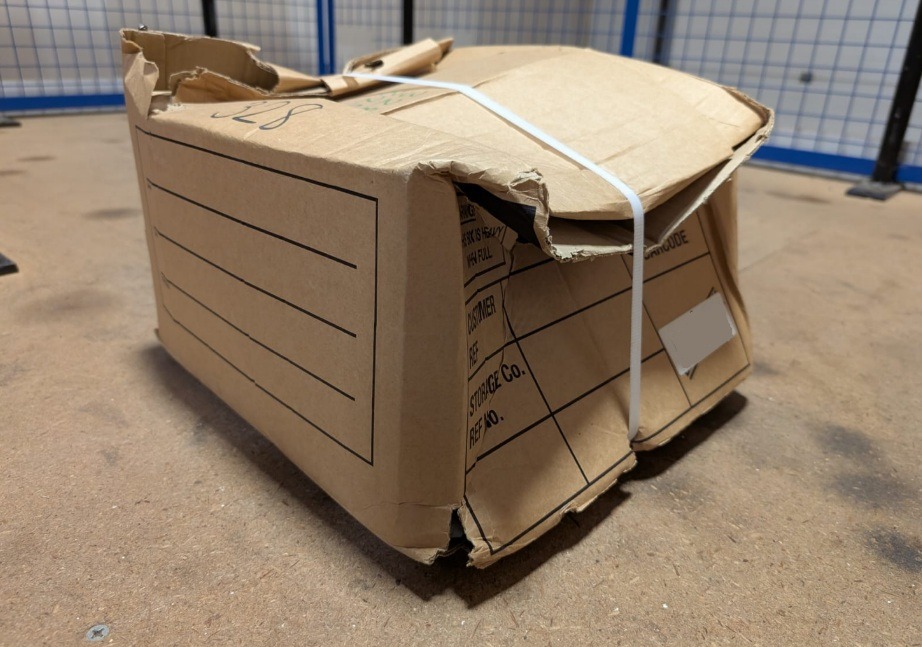
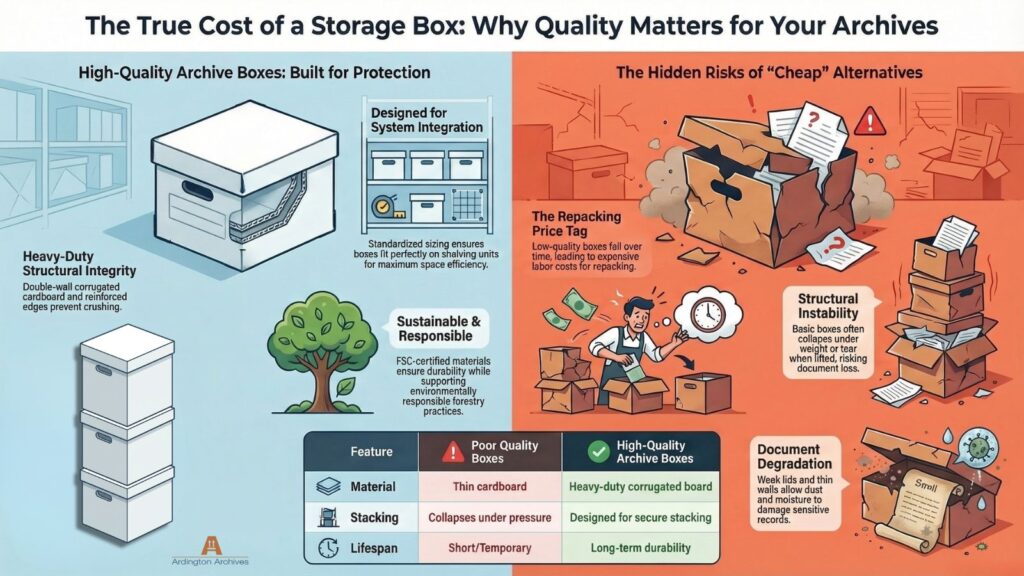
A well-made archive box keeps dust out, maintains the shape of the documents inside, and holds its own structural integrity under the weight of other boxes stacked on top. A poorly made one can warp, split, or simply collapse, leaving files exposed, disordered, or damaged. Neither outcome is acceptable when those records may be needed for an audit, a legal dispute, or a compliance check.
What separates a good archive box from a poor one
The most noticeable difference is the material. Quality archive boxes are made from heavy-duty corrugated cardboard, often with a double-thickness construction that gives them both rigidity and resilience. They are designed to be stacked without buckling and to be lifted repeatedly without the handles tearing away.
Sizing consistency matters too. In a managed archive environment, boxes are stored on shelving systems that are designed around standard dimensions. A box that is the wrong size, or that differs slightly from batch to batch, creates problems. It may not sit properly on the shelf, it may not stack cleanly, and over time that instability adds up.
A secure lid is another straightforward but important feature. An ill-fitting lid leaves documents exposed to dust and means that files can shift around inside the box during handling or transport. A properly fitted lid keeps contents in place and the box sealed.
Labelling is also worth considering. A good archive box will have a clear, accessible label area, often with a designated slot or panel, so that boxes can be identified quickly without having to open them. In a storage facility handling thousands of boxes, this kind of detail makes retrieval considerably more efficient.
The environmental factor
Responsible sourcing of materials is another consideration that businesses are paying more attention to. Archive boxes made from FSC-certified board come from responsibly managed forests, and boxes with a high recycled content reduce the environmental footprint of your storage programme. Durability and sustainability are not in conflict here. A box that lasts longer does not need replacing, which means less waste over time.
At Ardington Archives, our storage boxes are made from high recycled content board with a double-thickness skin, are pH neutral to protect document integrity, and meet BS 4971 standards. They are supplied flat-packed for ease of transport and assembly.
The real cost of a cheap box
The upfront cost of a lower-quality box can look appealing, particularly when you are ordering in volume. But the longer-term picture is less straightforward. A box that collapses under stacking weight, or that tears when lifted, creates extra work. Documents may need to be repacked. In a managed storage environment, failed boxes mean additional handling, additional labour, and in some cases, damaged records that cannot be restored.
There is also the question of consistency. The boxes from online office suppliers are not designed with archive environments in mind. They often vary in size between batches, which makes organising a shelving system difficult. They may not be pH neutral, which over many years can affect the condition of the paper inside. And they simply are not built to last the length of time that archive storage requires.
Over a ten or twenty-year retention period, a more durable box is almost always the more cost-effective choice.
Choosing the right box for the job
If you are setting up or reviewing your document storage arrangements, it is worth thinking about the box as a practical tool rather than just a container. The key things to look for are strong corrugated construction, consistent sizing that fits your shelving system, reinforced handles, a secure lid, and materials that meet relevant archiving standards.
It is also worth considering where you source your boxes. Specialist archive storage providers will supply boxes that are designed specifically for long-term document storage, rather than general-purpose alternatives that happen to be cardboard.
Keeping records in good order
Many businesses invest considerable effort in organising their archives, establishing retention schedules, and maintaining accurate indexes. All of that work depends, at its foundation, on the physical integrity of the box. If the box fails, the organisation around it fails too.
The quality of archive storage boxes is not a minor detail. It is a practical question that has a direct effect on document protection, storage efficiency, and the long-term cost of managing your records. Getting it right from the outset is a straightforward way to protect the investment you have already made in organising and storing your documents properly.
If you would like to find out more about archive storage boxes or our document management services, please get in touch with the team at Ardington Archives.