
Your Backup Tapes Are Probably Fine. Until They’re Not.
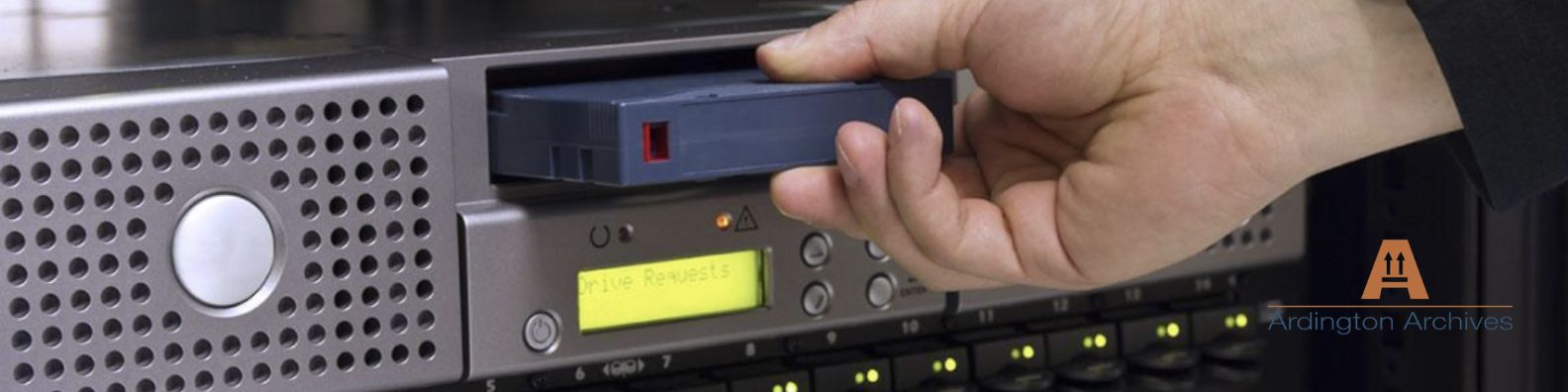
We’ve had a version of the same conversation several times over the past few years. A business contacts us about backup media storage. We ask about their current setup. They tell us the tapes are in a cupboard in the server room, or in a fireproof safe, or in a storage unit down the road.
When we ask about the environmental conditions, there’s usually a pause.
The honest answer, in most of these cases, is that nobody really knows. The tapes haven’t caused any problems, so the assumption has been that they’re fine. And they probably are fine. Right up until the moment someone needs to restore from one.
That’s the nature of backup media failure. It doesn’t announce itself. Tape substrates degrade gradually. Magnetic coatings become unstable at temperature and humidity extremes that office environments regularly hit. By the time the problem surfaces, it’s usually because a restore has failed and the data needed is gone or partially unreadable.
Cloud adoption has made this easier to dismiss. The thinking goes: we’ve moved our backup infrastructure to the cloud, so the tape problem is behind us. But that’s only true for organisations that have genuinely migrated everything and have no legacy media still within its compliance retention window. For most businesses we talk to, that’s not quite the situation.
The tapes haven’t caused any problems, so the assumption has been that they’re fine. That’s exactly the kind of logic that doesn’t hold up when you need a restore.
The Cloud Migration Problem Nobody Talks About
When a business moves to cloud backup, the active backup programme shifts. But the legacy tapes don’t disappear. They sit wherever they’ve always sat, holding data that must be retained for compliance reasons until the relevant retention period expires.
For HMRC tax records, that’s typically six years. For FCA-regulated trade data, it can be seven. For clinical trial documentation under EU CTR, it’s 25 years from the trial’s end. For certain healthcare records, longer still.
These aren’t edge cases. They’re the standard retention requirements for large chunks of the UK business population. And the organisations that hold this data on legacy tape often have no ongoing reason to think about the tapes at all, which means the storage conditions that were adequate-ish when the tapes were actively used haven’t been reviewed or improved since.
The tapes become invisible. Until they need to be visible.
What Actually Damages Backup Media
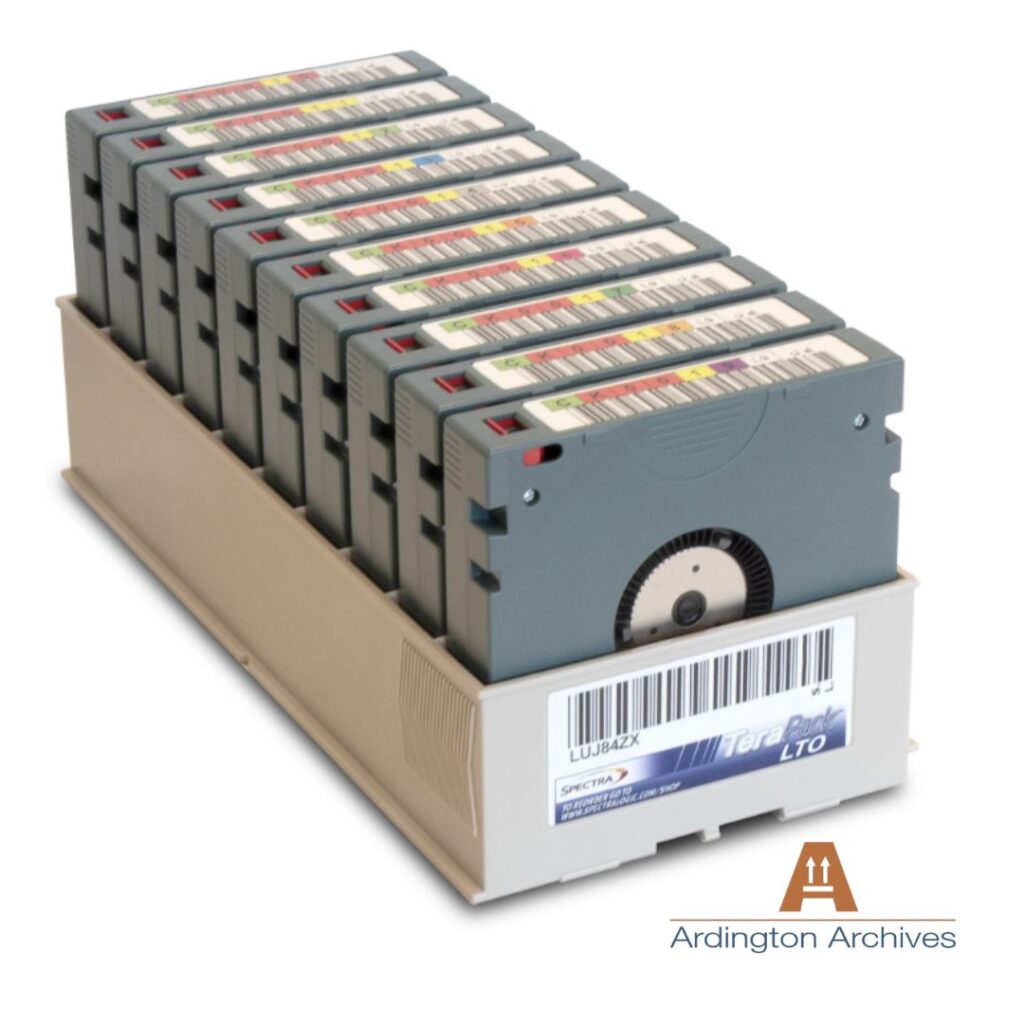
The LTO Consortium publishes storage specifications for LTO tape. The recommended range is 16 to 25 degrees Celsius and 20 to 50% relative humidity, maintained consistently. Not as a peak or average, but as a stable environment.
Most UK offices don’t meet that specification reliably. Heating systems cycle off overnight and at weekends. Air conditioning isn’t always present in storage areas. Summer heat in an unoccupied room can push temperatures well above 25 degrees for sustained periods. These excursions are rarely monitored, rarely logged, and rarely cause obvious short-term problems. They accumulate.
Then there’s magnetic interference, which is less commonly understood. Strong magnetic fields from industrial equipment, unshielded electrical infrastructure, or certain types of racking can corrupt magnetic media without any physical contact or visible damage. The media looks fine. It reads incorrectly.
And then there’s fire suppression. A standard office sprinkler system will destroy magnetic media. Not damage it. Destroy it. Water and tape are not compatible. A proper media vault uses gaseous suppression, typically argonite or a similar inert gas, which extinguishes fire without touching the media. That’s not a luxury specification. It’s a basic requirement for any facility that takes media storage seriously.
The Rotation Problem
For businesses that do still run active tape rotations, there’s a different risk: the process is usually owned by one or two people and held together by habit rather than system.
The collection is supposed to happen on a Tuesday. The person who booked it was on leave last week. It got pushed and then pushed again. Nobody flagged it because the business didn’t have an incident, so there was nothing visible to flag. Three months later, the most recent offsite tape is from eight weeks ago.
This is the most common backup storage failure we encounter. Not catastrophic media degradation. Not fire or flood. Just a rotation that gradually slipped because the process had a single point of human failure built into it.
A managed offsite arrangement with scheduled collection removes that dependency. The rotation runs whether or not the person who usually handles it is available. That’s a small operational change with a meaningful risk reduction.
Who This Still Matters For
It’s worth being specific, because this isn’t relevant to every business.
If you’ve fully migrated to cloud, you have no legacy media within its retention window, and you’ve properly decommissioned all physical backup infrastructure, this probably doesn’t apply to you.
If any of the following describe your situation, it probably does:
- You hold legacy backup tapes from before your cloud migration that are still within their compliance retention period
- You’re in financial services, healthcare, or life sciences and have regulatory-driven long-term retention requirements on historical backup media
- You run an active tape rotation programme, and it’s currently managed manually by one or two people
- You hold broadcast archive tapes in older formats that haven’t been migrated to current systems
- You’re a CRO or pharma sponsor with clinical trial backup media that must remain accessible for regulatory inspection
For these organisations, the question of where the tapes are stored and in what conditions is not a minor administrative detail. It’s a risk management question with potential regulatory consequences attached to the wrong answer.
The Thing Most Businesses Don’t Do
Restore testing.
A tape in storage tells you nothing about whether the data on it is readable. The only way to know that is to test it. Take a tape, attempt a restore, document the result.
For media held for compliance or disaster recovery purposes, a documented annual test of a sample of stored media provides evidence that the backup programme is functioning. It also surfaces problems early, when there’s still time to do something about them, rather than now of a restore request when there isn’t.
Most IT teams know they should be doing this. Fewer do it consistently, partly because it takes time, partly because nothing has gone wrong yet, and partly because the tapes aren’t in active use so they stay out of sight and out of mind.
If you haven’t done a restore test on archived media in the last twelve months, that’s a gap worth closing. Not urgently, but deliberately.
A tape in storage tells you nothing about whether the data on it is readable. The only way to know that is to test it.
What We Actually Do
Ardington Archives has provided offsite backup media storage for over 30 years. Our facility is purpose-built for the purpose: gaseous fire suppression, continuous environmental monitoring within LTO-specified ranges, physical access control, and a documented chain of custody for every collection and return.
We work with IT teams and compliance managers across financial services, healthcare, life sciences, broadcast, and general enterprise. Some clients have active rotation programmes. Others have legacy media that needs to be retained and accessible but won’t be touched for years. We handle both.
If you’re currently storing backup media in an environment that hasn’t been assessed against the manufacturer’s storage specifications, it’s worth having that conversation before you need to restore from something and discover it’s unreadable.
Ardington Archives provides secure offsite storage for LTO tapes, hard drives, and other digital backup media. Get in touch to talk through your current arrangement and whether it’s meeting the right standard.